
Under Stairs Office
Under Stairs Home Office - Your Workspace, Hidden in Plain Sight
No spare room for a home office? The space under your stairs might be more useful than you think.
Working from the Space You Already Have
Not everyone has a spare bedroom to convert into an office. But most homes have a space under the stairs that is either empty, used as a dumping ground or hiding behind a single door with no internal organisation. With the right design this space can become a compact, fully functional home office.
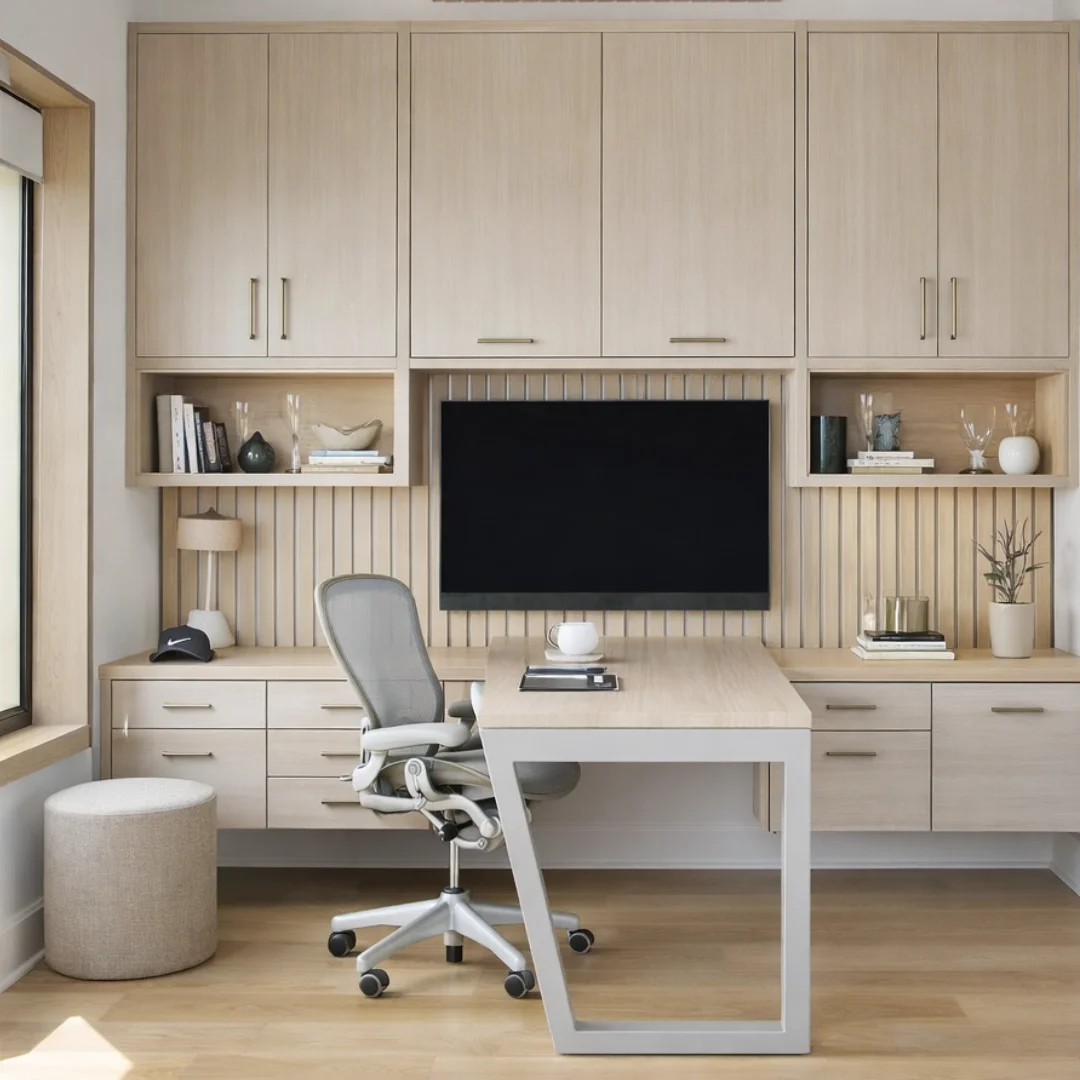
We build the desk into the tallest section of the staircase, add shelving and storage into the areas where the ceiling drops, and fit doors so the entire office can be closed away at the end of the working day. Cable management is built in from the start.
What We Fit
- Desk surface - a worktop positioned in the tallest section of the staircase, sized for a monitor, keyboard and working documents.
- Storage - shelving and drawers built into the areas where the ceiling height drops, using every part of the space.
- Cable management - built-in cable channels from the desk surface to a power source, with optional integrated sockets and USB ports.
- Doors - bi-fold, sliding or hinged doors that close over the workspace so it is hidden when not in use.
- Chair clearance - the desk position and depth are designed to allow comfortable seated use with proper legroom and chair movement.
Frequently Asked Questions
A minimum ceiling height of around 125-130cm at the desk position is needed for comfortable seated use. We position the desk in the tallest section of the staircase and design the layout to make the most of the available headroom.
Yes. We can build in a monitor shelf or reinforce the desk surface for a monitor arm. We also allow for screen height and viewing angle when positioning the desk within the staircase profile.
Yes. We can fit bi-fold, sliding or hinged doors that close over the entire workspace so it disappears into the hallway when you finish for the day.
We design around existing services and build access panels into the units so meters, stop taps and other services remain accessible without dismantling anything.